Showing posts with label books. Show all posts

Sunday, May 9, 2010

The Year of Reading Faulker: As I Lay Dying


This book sucked. I'm done with it. Darl, Cash, Tull, don't care what happens to your mom or where you bury her.

I was supposed to be done with it a long time ago. Onward to Light in August (I think).


More after the jump...

Monday, April 5, 2010

missed it the first time: The Hipster Handbook by Robert Lanham


Gawker christened "fauxhemians" as the new word for "hipsters." I agree with the decision; I voted for that word twice.
Font size
But the past without introspection is just...boring. So a few weeks ago, I was reminded of a nice little "hipster" gem: The Hipster Handbook by Robert Lanham (Anchor Books, 2003) which I plucked from the cheap confines of Paperback Swap.

First things first: I shouldn't tread to try and criticize this thing. Not according to the haughty reviews such as this one: "The Hipster Handbook is so comprehensive and so well-done that only a poseur could criticize it without tongue in cheek."

Oh dang. It warded off critics before any critics dared to open the book.


The book is only 7 years ago, but that's at least a decade in faux-hipster-hemian terms. The cover is adorned with a shadow with a faux-hawk. And speaking of hair, the book uses the word "mulletude" with all seriousness.

Otherwise, at an attempt to be sarcastic or to deflect criticism, the book tries to institute two new words---"deck" and "fin."


Astute readers will notice one of those words in the title of my blog, so here's the truth: my blog name is partially derived from this book.

HCD first heard of this book, back when we were in "college" and and learned of Mr. Lanham's continuous "deck" ("cutting edge") vs. "fin" ("similar to outdated terms like 'wack' and 'lame'") debate that runs in the most annoying way possible across the book.

In an attempt to become Williamsburg-cool, HCD would evoke the word "deck" to deride specific corporate attempts to engage him i.e. his money: "This commercial is so deck," HCD would say, while watching a Honda Element commercial. "They are trying to appeal to me. I wish I could buy one right now!"

Hence: DECK-FIGHT (that means I don't like the word "deck" in Lanham's context).

I'm sure Mr. Lanham meant for the word to be mocked (can't everyone tell I'm joking??? he would say) while secretly hoping it would catch on. Here's the final verdict, Mr. Lanham--it did not catch on.

And I'm serious about this deck and fin thing. He uses it almost every page. EVERY PAGE, as if he is afraid "deck" and "fin" and "hipsters" will go out of style...oh wait.

As a history book, then Mr. Lanham's book cannot be fully trusted. Very often, his terms are way-off, but he does find accurate portrayals of SOME type of boho-hipsters. Like fake cowboys and girls in long black skirts with messenger bags on bikes.

But look at this guy:


Yes, that says "bipster." According to accurate Google search results, "bipster" usually refers to a style of UGG boots. Only other self-aware hipster outlets like Urban Dictionary use the word with Lanham's intention.

Lanham also tries to rank past celebrities into hipsters and non-hipsters, using the word "deck" in reference to Amelia Earhart, e.e. cummings and Sitting Bull and Yul Brynner. Those disapproved are Clark Gable, Raymond Chandler and John The Baptist.

I like Raymond Chandler and John The Baptist alright.

Beyond the penchant for bad lingo, Lanham does get a few things right. The hipster literature section hit too close to home. Besides the usual suspects (Dennis Cooper, David Foster Wallace), there's also Jim Thompson's The Killer Inside Me, which I just read for the first time last year and named it the best book I read last year. Guilty as charged.

Surprisingly he named Thomas Pynchon's Mason & Dixon ahead of Gravity's Rainbow...hmmmm, think the hipster prefer the latter...

He also lists Public Enemy's
It Takes a Nation of Millions to Hold Us Back as the third fave hipster album of the 80s and that's definitely held true for all the non-hipsters in the past 7 years.

Some of the social rules are also accurate, like a section on a hipster dating a non-hipster. "Hipster men often find the forbidden fruit of a sorority girl or a personal trainer to be the sweetest of all" and "[Hipsters] can also find pleasure in being considered the most outrageous person at the party when mingling with their lover's non-Hipster friends."


But now I have a new problem. What do I do with this book now? What are the rules for that?

Bottom line: Am I deck or fin if I use this book to light my grill while drinking a PBR?
More after the jump...

Friday, March 12, 2010

The Year of Reading Faulker: As I Lay Dying


Did you think I forgot? That I would let this pass quietly into the night? That the overwhelming, convoluted, winding passages about Mississippi's rural quirks would frustrate me to no end?

After being thoroughly confused by
The Sound and The Fury, I came to As I Lay Dying with some trepidation. The path before me had been carved by my good friend HCD who attempted the book a few years ago, but came back with little to show for it. Here's what he had to say:

I had always hated fiction. But as a college sophomore seeking to shun mainstream society, I discovered a hardcore band called As I Lay Dying. When I learned that the name was from Faulkner, I made a revolutionary decision: I would voluntarily read this novel. You can guess how my mind was transformed…

It wasn’t. I checked AILD out of the library, read 20 pages, remembered why I didn’t like novels, and returned it to the library three weeks later.

I did eventually gain an appreciation of fiction. Not high brow fiction, but John Grisham and paperbacks with embossed titles that you can buy at Wal-Mart—completely not hip, I know.

Will I give Faulkner another chance? Will his lost spy novel manuscript ever be discovered? (ed. he's joking...I think...)
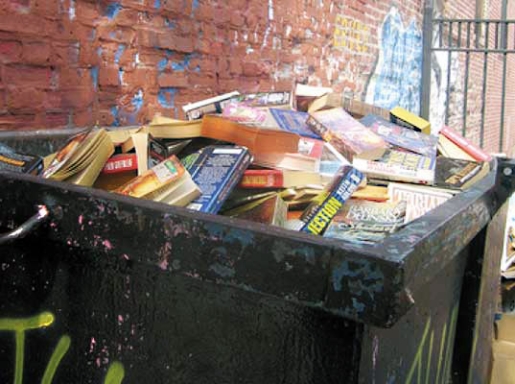
I get this book or I think I get this book. I'm enjoying it actually. About 60 pages in, I think I understand Jewel, Darl, Tull, the girl named Dewey. Jewel and Tull left even though their mom was dying. I'm intrigued. It's still convoluted, it still winds around, there is no sense of chronology, but Faulkner obviously had it in mind--he tears bits off the puzzle, makes his own pieces and glues them back together in his own design.

I'm hyper aware of Faulkner's rhythm after reader The Sound and The Fury, whcih has disciplined me for this one. Maybe the only way to read Faulkner is to read them all back to back.

Anybody else read this? What are your thoughts?


More after the jump...

Tuesday, March 9, 2010

LIt Randomness: About that literature stuff....


Lit Stuff=Impose Magazine.


The blog is called Codex. Lit Randomness, the occasional book review and Q&A's will carry over.

Here's the first post on
some Sam Lipsyte interviews. Later this week, a quick Q&A with Lipsyte.

I've always appreciated the many authors who took a few minutes out for Deckfight, and now this connection with Impose will give authors a bigger platform.

It's a plus when more websites and magazines adopt book sections rather than cut them or ignore books altogether. So, read Impose if you don't already.

What does this mean for Deckfight?


-More indie rock and more Southeast indie rock.
Some lit stuff will still appear here, such as
The Year of Reading Faulkner and maybe some older books that I missed the first time.

Still contact me for your lit or indie rock needs: deckfight [at] gmail.com. More after the jump...

Friday, March 5, 2010

Friday Five: 5 Best Things Aaron Burch Has Read Recently


That's an image representing Aaron Burch's new book, How To Take Yourself Apart, How To Make Yourself Anew out now from Pank. It details how to take yourself apart.

That image is all I got b/c I forgot to ask Aaron for a photo. In addition to that chapbook, you probably know Aaron for his work with Hobart, one of the coolest & distinctive lit journals out. Read that, but you probably do already.

Here are the 5 best things Aaron Burch has read recently...


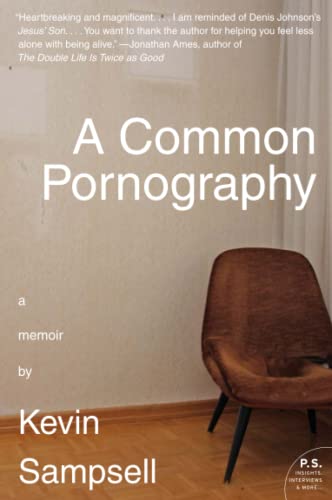
1. A Common Pornography by Kevin Sampsell

I've known Kevin for years, both being Northwest indie lit peeps, though Kevin obviously much, much more so than I. But, anyway. I've read his stories and small press books over the years and, as much as I've enjoyed pretty much all of it, my fave was always his short memoir-type thing, A Common Pornography. So... I've been excited about this expanded/reenvisioned book ever since I heard it announced and it did not at all disappoint. I really don't want to overstate, but I think this might have been my favorite memoir I've ever read.


2. Zachary Schomburg's book of poetry, Scary, No Scary. And, specifically, the index.

First of all, how many poetry books have indexes? OK, maybe practically all of them; I don't know, I don't really read much poetry. But, a real "index," not just a reference of "first lines" like I've seen a handful of times. Also, Schomburg's index is like it's own poem, with entries like: "Compression (specifically the idea of being crushed into a tiny cube)" and "Infinity, or a very long time."

2a. My love for Schomburg's poems, despite my fiction prejudice, has reminded me of two other recent poem loves, which I would feel remiss if I didn't mention: "In the Desert" by Stephen Crane, and "Alien v. Predator" by Michael Robbins. I translate the Bible into velociraptor, indeed.

3. The About A Mountain excerpt by John D'Agata in The Believer

I also just read this whole book (back-to-back nonfiction books) and as much as I liked and enjoyed and appreciated it, and as well-written, and etc. etc. as it is, I think I preferred the excerpt in The Believer. I don't know... it seemed more focused and, obviously, concentrated. And I really liked how it played with the structure and the 9 numbered sections. And some of what I'll call D'Agata's "moves" (I was originally, when I started thinking about this list a week or three ago, going to include this blog post on my list of 5, but now some time has passed and I have some new good stuff to pimp) that I loved so much in the excerpt ended up feeling repetitive and less interesting in the longer format. That said, the book was great and I read it in two, maybe three, sittings, which obviously says a lot. But, still. I recommend the Believer excerpt.


4. The Dark Knight Returns analysis on bigother.com

In-depth graphic novel analysis? Superbly written, with tons of examples, etc. Makes me want to go back and reread The Dark Knight Returns all over again.

5. The most recent quote I got to print the next Short Flight / Long Drive minibook.

The first quote I got, from a printer that I knew prefers not to print smaller, "odd-sized" books, left me gasping for air. I thought I was going to have to go crazy into debt and maybe even give up the goal of publishing books. But then another quote request came through and, at almost a third of the price, I am still sighing. Easily one of the best things I've "read" in a long time. Phew.

5a. The next minibook: The Avian Gospels by Adam Novy.


I hate to use this to just mention a book I'm editing and publishing, but I got the above-mentioned quote because we're getting ready to print this thing, which means I've been reading it yet again, working on edits, etc. and... hot damn. This book is amazing. I can't wait for people to read it.

More after the jump...

Wednesday, March 3, 2010

Lit Randomness: Stories at Necessary Fiction, Gigantic, Lifted Brow, Dogzplot Flash, Fictionaut


An Insurrection by Robert Swartwood:
At
Necessary Fiction.

Dodge Rams & lip rings & bumper stickers.

Gigantic America One Sentence Prose Preview: At Gigantic.
Meant to submit to this & forgot, but this issue looks cool.

Twelve Poems by Tao Lin: At Lifted Brow.
Read what has caused a stir at HTML Giant (100 plus comments!)

The Music With You By Eric Bennett: At Dogzplot Flash.

Wall and Key by P. Jonas Bekker: At Fictionaut.
Just went to Fictionaut, looking for something random & this story came up. I appreciate sledgehammers.


More after the jump...

Monday, March 1, 2010

Lit Randomness: Stephen King & Joe Hill, Michael Schaub, Robert Coover


Stacks & stacks of Stephen King w/ William Walsh:
At Kenyon Review Blog.

Interv. w/ Joe Hill:
At AV Club.

Interv. w/ Michael Schaub of Bookslut: At Willamette Weekly.

Interv. w/ Robert Coover:
At Bookslut.


More after the jump...

Wednesday, February 24, 2010

Lit Randomness: Stories by Scott Garson, Ben Tanzer, Ryan Bradley & Justin Hyde


"Two Flash Fictions" by Scott Garson:
At 3 AM Magazine.

Small Lockers in the Back of the Factory
by Justin Hyde: At Zygote in My Coffee.

Annalemma Double:

"Goddess" by Ben Tanzer

"Goodbye Ruby" by Ryan Bradley

(Magnum P.I forever).

Shameless self-promotion by the ever shameless people of Deckfight.
Follow that shamelessness here.


More after the jump...

Monday, February 22, 2010

Lit Randomness: Justin Taylor, Criminal Class Press, Charles Burns, Lorraine Adams


Some questions with Justin Taylor:
At NY Times PaperCuts.
And Vol 1 Brooklyn reviews Taylor's new one.

Sweet interview with Kevin Whitely of Criminal Class Press: At Orange Alert.
Never heard of this guy or press before, but he tells an engaging story just in the first couple of questions...

Q&A w/ Charles Burns & Gary Panter: At Indirect Collaboration (via Vol 1 Brooklyn)

Interview with Lorraine Adams, author of The Room and The Chair: At The Nervous Breakdown.


More after the jump...

Friday, February 19, 2010

Friday Five: 5 Best Things Kaya Oakes has read recently


Kaya Oakes is the author of Slanted and Enchanted: The Evolution of Indie Culture. She's also teaches writing at UC-Berkeley, founded the magazine Kitchen Sink and also has a book of poetry, called Telegraph. She can be found on the interwebs here.

Read our review of Slanted and Enchanted and then buy it here. After doing that, read the five best things Kaya has read recently...


1. Kelefa Sanneh "Revelations", The New Yorker, February 8th, 2010
Saneh's essay on the gay gospel singer Tonex's decision to come out of the closet is a fascinating look at contemporary gospel music, the power struggles within the black church, and an inquiry into our contemporary notions of faith and sexuality.

2. Steven Johnson, The Invention of Air, Riverhead, 2008
I've just started reading this, but Johnson's nonfiction investigation into the life of Joseph Priestly, who discovered oxygen, co-founded the Unitarian church, and hung out with a group of guys called the Lunaticks (they only met during the full moon) is a pretty enjoyable read even for science-phobes like myself. The fact that Priestly was kind of a nutcase helps keep things interesting.

3. College Wriitng R4B essays, UC Berkeley, Spring 2010
I'm teaching two sections of this research writing course. The course topic is "adventures in the musical underground" We began by reading about Dylan's passage from the folk underground into superstardom, segue into American punk and indie rock, and wind up examining the rise of hip hop. My students write a lot of essays. I read all of them. Many of them are quite good.


4. Neutrogena T-Gel Stubborn Itch Shampoo packaging; Scalpicin Extra Strength lotion packaging; Flunocinide Topical Gel packaging
Eczema is a bitch. When will this crap start working?

5. Kaya Oakes, untitled nonfiction book proposal, 2009-2010
Can't tell you what this is about, who might publish it, or when (or if) it'll see the light of day, but like a lot of writers, I find myself opening this document over and over again, going in, tinkering, re-tinkering, sighing, cursing, re-tinkering, cursing a lot more, sighing, closing it, walking around, opening it again, cursing some more.


More after the jump...

Thursday, February 18, 2010

review: Slanted and Enchanted: The Evolution of Indie Culture by Kaya Oakes

Friday Five with Kaya Oakes tomorrow!


Slanted and Enchanted: The Evolution of Indie Culture
by Kaya Oakes
Holt McDougal, 2009


As one of the cofounders of indie mag Kitchen Sink, Oakes is undeniably qualified and interested in compiling a book about the modern indie culture. She never delves quite into the specific semantics of “indie” (cue recent Paste Magazine article) but instead provides myriad examples of the indie culture’s growth and transition.


By location and interest, Oakes is west coast specific, but it doesn’t hurt the examples. The Gilman Street, Op Ivy and Lookout Records in Berkeley or the Riot Grrrl, Bikini Kills, Sub Pop and Evergreen State College in Olympia, Washington are all appropriate examples, of course. If all good big media ideas come from the east, then all good DIY ideas come from the west. Oakes is suited perfectly to explain all of this--she either experienced it firsthand or has met most of the major players in the various zine, punk and handcrafted scenes from general interest or personal involvement.

The thread through the chapters exploring punk, indie rock, zines, crafts and comics is a homegrown/grassroots newness/isolation. Nobody knew if they had a good or marketable idea at the beginning of Bikini Kills, they just had an idea that seemed fun. No one knew that Operation Ivy was going to revolutionize punk rock they just had a sound that everyone immediately gravitated towards. Sometimes when more “professional” planning came into play, it also killed what had made it great.

As Oakes says in the example of Lookout Records: “anyone who’s been involved in the arts knows that once something goes mainstream, thing can never go back to how they were before” (76). No one gets into labors of love for the money, and if and once the money comes, it often disrupts.

The book is part history lesson and part appreciation. It’s awesome to learn about the history of the zine Cometbus or Fantagraphics comics or how Pavement wandered into indie rock accidentally only to be castigated once they veered towards the arena rock they appreciated.

In addition to mainstream exploitation, another indie pitfall is for fans to build idols out of their favorites then destroy them when something isn’t “indie” enough---but the word itself balances on a treacherous edge.

More from Oakes on contemporary Internet infusion would have been helpful--just in the way that blogs, mp3s, mashups and community boards have influenced the DIY movement, or if that is indie/DIY at all. There is no history lesson here on the first video games or blogs, information that may have been interesting or at least addressed for why or why not they should fall under indie.

Oakes obviously did her homework. There are tons of interviews and first-hand visits and she speaks with a insider’s knowledge, but with a clear head towards objectivity and description.

More after the jump...

Wednesday, February 17, 2010

review: Hear No Evil by Matthew Paul Turner

Read Matthew's Friday Five from the archives...


Hear No Evil: My Story of Innocence, Music and the Holy Ghost
by Matthew Paul Turner
Waterbrook Press, 2010

If it was 1991 and Hyper Color was still cool, Turner's book would sweat the term "satire" into a different color--this is biting commentary for those that get it, it is controversial for the innocent and it is enlightening for those that think evangelical Christianity is a monolithic block of tea partiers and Palin apologists.

And all of it is centered on the close-knit Christian communities that Turner finds himself a part and apart of. Oh wait, did I say it's funny? It's funny.

On the flip side, this is not theology or a "new way to do church" or anything emerging anywhere, it is in the most clear of terms similar to something Dave Barry or Lewis Grizzard would write in columns and now most closely resembles David Sedaris' funny parts. It's a memoir of music, told in vignettes of chronology.

In that way, we learn that Turner as a young kid has an unhealthy fascination with Sandi Patti, Amy Grant and wonders if George Michael is a Christian (Turner finds out he's not....). Turner grew up in the type of sheltered environment where a devotion to Michael W. Smith (or "Smitty" as Matthew calls him) is grounds for hell. Yes, the Michael W. Smith of "Friends" and "Place In This World" was going to send Turner to hell. We're treated to a secret undercover van ride to a Sandi Patti concert and Matthew's struggle in holding on to an Amy Grant tape.

Besides the obvious humor in Turner's devotion to such pop luminaries, this book also clearly explicates Nashville's OTHER music industry.

He gives many possible slices for YOU'RE SO NASHVILLE IF....you can recognize a Christian rocker by their cleanliness, you have a conversion experience to Calvinism, you are a Christian musician "contractually obligated" to faith, or a girl breaks up with you by referencing that she is dating Jesus only to date a Christian keyboardist two months later.

As someone that spent a few years in Nashville and as a Christian, all of these instances are too familiar, hilarious and cringe-worthy. It hits too close to home and nails the bulls eye all in the same throw.

But Turner rarely makes his point too forcefully, it usually goes down with a healthy dose of with. He never has to say that he's skeptical of Pentecostals' healing power, it becomes all too obvious when they try to pray over his burping problem and their prayer fails. But Turner, being gracious, goes to the bathroom and burps instead.

Skepticism is a strength of Turner, but Turner's willingness to overlook flaws trumps it. There are some kind parts such as when Turner takes pity on a woman who wears too many BeDazzler tshirts.

He also has a strong history with music, I was (selfishly) hoping for a few more examples of the Christian music industry gone amok. The ones provided, such as the Amy Grant interview, are outrageous enough, but I was thinking there had to be a funny Christian music fest experience, a GMA meltdown or something with confused Christian punk rockers.

But that is me wanting the gritty gossip and Turner does a fine job in going above and beyond that.

Turner provides a new trove of potent examples about how Christians have it far from figured out and that some of the biases against Christians and Christian music is most definitely true. Thankfully, there is someone like Turner to give it a punch with his tongue usually in his cheek.

Oh wait, did I say it's funny? It's funny.


More after the jump...

Lit Randomness: Steve Almond, Monopoloy, John Hughes


A hybrid lit randomness:

Steve Almond explains why self-publishing doesn't totally suck:
At The Rumpus.

John Hughes wrote some mad fiction in addition to Home Alone: At Vanity Fair.

"The Woman Who Took Off Her Pants" by Jimmy Chen: At Staccato.

"Monopoloy, A Photo Essay" by Roxane Gay:
At Artifice.
Ok, this isn't fiction, or really a link about fiction, but it's sensational.


More after the jump...

Monday, February 15, 2010

The Sound and The Fury Update 3


The Sound and The Fury: Update 3 (Final Update)


Finally finished this, but I will declare it "undone."
My copy of The Sound and The Fury does not have the appendix with the explanations of the Compson family and the fate of Caddy, once again I turned to the reliable Wikipedia in this matter. An interesting turn by Faulkner to name Caddy's daughter Quentin after her brother that committed suicide. The fated wild streak of the Miss Quentin comes to bear in the last section where no one has any control over Miss Quentin and she runs away with a carnival barker (was this mentioned in Section 3? Can't remember).

Perhaps the most disturbing of all this is Dilsey's steadfast loyalty to the Compson family and the family's reliance/command over Dilsey. Jason's reasoning for holding onto Caddy's money instead of giving it to Quentin is understandable, but it seems that instead of hoarding it, spending it towards improving his family now, rather than holding it for some uncertain future glory, Quentin's actions seem justifiable in stealing from her Uncle Jason.

On Matt Baker's recommendation, I read a piece in a 2006 issue of Oxford American about The Sound and the Fury by William Caverlee. Though Caverlee says that the Jason section is 'comic relief,' to me it's more like typical family disfunction, desperate moves for a desperate family, once prominent now a failure. But maybe Caverlee is right, normally that would be sadness, but Faulkner sets everything else up before it as so depressing, that Jason becomes semi-sympathetic.

Caverlee also dissects the odd chronological sectioning, but also addresses the first-time readers' discombobulation. There is constant guessing on speaker, timeline, frustration. Caverlee says this about the Quentin-narrated section:
"[Faulkner] pushes--dares--the reader to give up entirely, to throw away one's marked-up text, chartes and timelines with a groan of exasperation at the verbiage, at 'lonely and inviolate sand'--then draws us back in at the last minute with some gesture--the lost Italian girl at the bakery, the boys at the river--some gesture of fineness and bewilderment and human loneliness"
At least I know I'm not alone.

Next up: As I Lay Dying

More after the jump...

Friday, February 12, 2010

Friday Five: 5 Best Things J.A. Tyler has read recently


(I jacked this photo from the awesome interv. w/ J.A. Tyler at The Faster Times. Hope everyone is cool with that).

Like I said yesterday, Mudluscious is awesome and I'm thinking just by association maybe, that editor J.A. Tyler is cool. Though his publishing schedule seems pretty prolific, his own writing is found in a lot of places as well.

J. A.
is the author of Inconceivable Wilson (scrambler books, 2009), Sinatra (vox press, 2010), In Love With a Ghost (willows wept press, 2010), A Man of Glass & All The Ways We Have Failed (fugue state press, 2011) and other upcoming books. His work has also appeared in Diagram, Sleepingfish, Caketrain, Fairy Tale Review, elimae, & Action, Yes among others.

In addition to all that madness, books from Mudluscious can be found at:
www.mudlusciouspress.com.

Here are the five best things J.A. has read recently:


1. Sleepingfish 8 just released from the always primed & bursting Derek White, this time in editorial-tandem with Gary Lutz, & they turned out an issue that was in the words of Soul Coughing, ‘aesthetically pleasing, in other words, fly’. Works by Sasha Fletcher, Blake Butler, Dennis Cooper, & far too many others to name. I loved that thing.

2. I read a note on the wrapper to a pair of chopsticks – it said: ‘please enjoy this good & delicious, the dynasty of Chinese culture &’. Those words amaze me.

3. Everything I read from Publishing Genius Press including the recent Easter Rabbit by Joseph Young, A Jello Horse by Matthew Simmons, & Mlkng Sckls by Justin Sirois. Seriously, you can’t go wrong with this mad mad press.


4. I am sitting by a sign that says ‘Rob Schneider for America’s Libraries’ – I don’t know, it scares me on many levels.

5. Baby Leg was an enormous book: a hardback version of a formerly serialized (online) story by Brian Evenson & the debut release from the newly formed New York Tyrant Books – covered in Evenson’s own bloodied fingerprints this was a book that I thought about for days after I finished, the images roaming my head & filtering into the rest of me.


More after the jump...

Thursday, February 11, 2010

review: MLP First Year Edited by J.A. Tyler

(Catch a Friday Five w/ J.A. Tyler tomorrow. Catch his Twitter story going on today from the CCLaP Center.)


MLP: First Year
Editor: J.A. Tyler
Mudluscious Press, 2010


Not going to lie. I was slightly giddy for this release. Don’t usually get that way often, if at all. The myth and legend of such a volume was overwhelming.


Great credit to J.A. Tyler and the Mudluscious Press crew for generating great interest. Or least at I had great interest. The MLP First Year is a collection of MudLuscious’ illustrious roster of chapbooks. Look through this list. See the ones that say "sold out"? They're sold out for a reason. I thought I had missed out.

But then there was this idea: the anthology. And the list of contributors reads like list of a cool kids birthday party for the (post)(post)(post?)modern literati set. So there’s Nick Antosca and Ken Baumann and Ryan Call and Blake Butler or Brian Evenson and Molly Gaudry and Shane Jones and Michael Kimball and Sam Pink. And those are just a few of the few that I recognize from various interweb stations.

Surely the others of the 40 or so contributors are (HTML) giants in their own right, in whatever circle they orbit--because one thing’s for sure, Mr. Tyler has impeccable taste in curating such a volume.

Then there’s that: taste. Or style, rather. Or format. The word “and” in every single case I could find is replaced with an &. There is a lot of CAPS. And what your mom would call “run-on” sentences. I’m assuming these were choices by the authors, which means that MudLuscious has captured that style, perhaps a generational push towards….something, something I'm going to call "urgent absurdist specificity." Rolls off the tongue. Go ahead and get your memes going on that one kids. Create a slideshow in Keynote with those words fading in and out over a spacey background.

Most of the stories have some type of absurdist bent, animals taking on unusual roles, kids turning into rats, people floating in clouds commenting on something or another below. There are bodies and body parts. There is a clown with grease on his forehead giving suggestions about book introductions in a piece by Mark Baumer. There’s a high descriptive quality to the stories. They are not short stories or even flash fiction segments really, but a description of a moment somewhere, part of this world but mostly not of this world where little moves, places and times are captured in fascinating sentences that bend into something about life.

Like in Lily Hoang’s “Mockery of a Cat”:

“The cats, it would seem, are trying to invade the old cat lady’s body. They are trying to replace all her parts, putting cats of various sizes in the spot where a liver or intestine would go.”
And it goes from there, the cat lady slowly becoming like or part of the cats. Body parts, check. Animals, check. Something odd with a realization about life, check.

That's all I got. This anthology is still seeping through my mind. I'm not trying to understand the quirkiness of the stories, but the power of them as a whole.


More after the jump...

Wednesday, February 10, 2010

Lit Randomness: Stories from Sam Lipsyte, Brian Evenson, McSweeney's & Dogplotz Flash


Here is fiction from various dates and states:

Excerpts from Lipsyte's new book, The Ask: At Five Chapters
I've read this book and it's a good book. More to come on Lipsyte in the next few wks...

"Jack and Jill" by JA Tyler: At CCLaP Center Twitter.
This is a new project from CCLaP and there might be a familiar name appearing on that there Twitter page soon.

Fiction from Brian Evenson and John Sellekaers: At Vice.
Don't think there's a name to this yet...

Dispatches From a Guy Trying Unsuccessfully to Sell a Song in Nashville: At McSweeney's.
I've enjoyed this column thus far...

"Two thousand city and two" by Mimi Vaquer: At Dogplotz Flash Fiction.


More after the jump...

Friday, February 5, 2010

Friday Five: 5 Best Things Matt Baker has read recently


I'm new to Matt Baker's writing. But I've seen his work in bookstores, libraries and in my home--in the form of the printed edition of the Oxford American mag. Baker was the circulation director and is now an associate publisher. His book, Drag The Darkness Down, was published last summer on No Record Press.


Matt lives in Little Rock, Arkansas and here's an interview with him that ran on the OA website.

Here are the five best things Matt has read recently:


1. The Knockout Artist by Harry Crews

Everyone knows that Crews writes about freaks. Eugene is no exception, he’s known for a trick, a self-inflicted knockout. But don’t be fooled, the “freak show” is a Crews trick to get you inside the tent. Once inside he demonstrates with big tent showmanship that the irregularities among us are really the truest human beings. And really, the spit-shined and polished regulars are the biggest suckers among us.

2. “A Pryor Love” by Hilton Als. The New Yorker Sept 13. 1999.

I still have a copy of this issue that I keep stored in my 1976 commemorative centennial wooden Budweiser box. I re-read this article once a year. It’s the best profile I’ve ever read about Richard Pryor. Pryor’s artistic honesty is unrivaled. My hero.

3. Real Unreal: Best American Fantasy 3 Edited by Kevin Brockmeier.

I’m not completely finished with this one yet and that’s intentional. I’m reading these stories slowly, like a twelve-stepper, one day (story) at a time. I don’t want to overindulge too quickly, and wake up the next day feeling like I don’t remember half of it. So easy goes it… and so far the stories are richly written and full of imaginative bursts.

4. The Unknown Knowns by Jeffrey Rotter

I borrow a well-used phrase from my pothead friend, Shane, who likes to say, “Seriously, this is the good shit.” That’s my sentiment exactly. You can take The Unknown Knowns with or without the cannabis, your choice, but you won’t need it. Reading Rotter’s hilarious novel gave me a serious fit of the giggles that stayed with me even after I finished.

5. “Amid the Swirling Ghosts and Other Essays” by William Caverlee

I learned more about on Faulkner’s The Sound and the Fury in his ten-page essay than I ever did in literature classes or the fragments of understanding I grasped on my own.
More after the jump...

Thursday, February 4, 2010

Is Shoplifting from American Apparel the new Catcher in the Rye?

(Ed.: There is a fine line between stupidity and courage and we cross one of the two below. Read Tao Lin's Friday Five.)


Meant to review this properly, but this review then this one and then the death of this author made me think and think some more. So here are a few bold statements.


I liked this book. Against all of my natural inclinations, against my natural prejudice (or jealousy) of Tao Lin's unique style, against the ‘hip’ and cool reference in the title, against his reference of an underground punk-rock festival (to prove how underground/how hip/how cool he really is?), I liked this book.

I liked the breakdown of the Wendy’s Spicy Chicken Sandwich. I’m a sucker for fast food references, I think they are still one of the least explored symbols in modern life; they are rich not only in saturated fat but with the meaning/expression of modern life, and yes I include Starbucks in there too and this passage represents why Tao Lin is a good, a frustrating and true writer:
“I long for a Wendy’s Spicy Chicken Sandwich,” said Sam.
“We should get them together,” Robert said.
“But I know I won’t feel good eating or after eating it,” said Sam. “I only like thinking about it.
“We should buy them then throw them away,” said Robert.
“Carry it around,” said Sam. “I would do that.”
It is flat. It is supposed to be. In a world of television sets, movie screens, computers, mobile devices and smooth windshields, this is an accurate representation of contemporary life. The style is the subject it represents. Real emotion is flattened when all emotion is tirelessly and endlessly repeated, dictated and shown.
“I feel tired of life”
Shoplifting from American Apparel is the new Catcher in the Rye. Here are my reasons for both books:

An intriguing and somewhat controversial style that delineates generational preferences.
Flat is the new phony.

To happen or not to happen? Doing nothing and more nothing, waiting for the payoff and wondering if there is a payoff.

CITR: “ Anyway, something always happens. I came quite close a couple of times, though. One time in particular. Something went wrong, though--I don’t even remember what anymore.”
SFAA: "I think we are going insane," said Luis. "From not being around people. We are starting to go inside ourselves, and play around inside our own mental illness. That doesn’t make any sense.”

Of course what happens is that everything happens.

The same and the same. That red hat and American Apparel. Drunken phone conversations and bored Gmail chats. Dancehalls = status = brand names. Literary allusions = band names. Thrown out of school = shoplifting and going to jail.

Young adults. Adrift. All those screwballs and hipsters.


More after the jump...

Wednesday, February 3, 2010

Lit Randomness: Stories from Opium Mag, LitSnack, Significant Objects, MonkeyBicycle


Sorry to the music side--I'm rocking a lot of lit this week. But read these stories, including one about Charlie's Angels.

"Motel Lives" by Charles Spano: At Opium Mag.

"Free Space" by Paula Ray: At LitSnack.

"Charlie's Angel Lunchbox Thermos" by Carl Wilson: At Significant Objects.
(this is awesome).

"Everyone's Velocity" by Katie Jean Shinkle:
At MonkeyBicycle.


More after the jump...
Related Posts with Thumbnails