Monday, September 14, 2009

review: Our Noise: The Story of Merge Records by John Cook, Mac McCaughan and Laura Ballance


Our Noise: The Story of Merge Records
The Indie Label that Got Big and Stayed Small


by John Cook with Mac McCaughan and Laura Ballance

Algonquin, 2009

This story of Merge is just about as much about being non-revolutionary as it is being “revolutionary.” So Merge is about signing bands one album at a time. Merge is about getting bands to stick within a recording budget. Merge is about helping bands fulfill their artistic ideas. Merge is revolutionary for doing sensible business and not flaunting exorbitant money on bands that may or may not make it. And even if you don't care much for their music, you have to appreciate the method.

And what Jonathan Marx of Lambchop says about Superchunk that could also apply to the label: “They weren’t desperate for cash; they weren’t desperate for fame. The only thing they were desperate for was the thing that they were doing.”


That desperation plays out in interesting ways. Superchunk and Merge was essentially formed in the mind of Mac McCaughan and Laura Ballance, who were dating in the early 90s and then later split. How and why the band and label survived their own personal relationship is a testament to their own integrity—that they believed the label and band was doing something greater than themselves.

But with that in mind, it’s hard to think that until earlier this decade, Ballance and McCaughan still had day jobs. Their myth and legend greatly exceeded their actual finances. And the same could be said for an incredible release like Neutral Milk Hotel’s In the Aeroplane Over The Sea, which took awhile to grab hold of the nation’s attention.

The book is set as an oral history, and the testimonies given consistently refers to Merge’s desire to wait on artists to percolate and to develop. The most reflective of this is Spoon, who was generally ignored on their major label, Elektra, only to release their breakthrough Girls Can Tell on Merge, where Britt Daniel finally released his inhibitions and incorporated more of a soul sound into his rock sound.

As interviewed by John Cook of Gawker, the stories alternate between Superchunk’s story and certain band stories. Not all bands are included, that would be near impossible, but some bands like M.Ward and Camera Obscura go without a mention at all. But including all of them would be impossible, but including a choice like Butterglory over those shows the commitment of Merge to good music over dollars.

I was also kind of surprised that there was no discussion with Ballance and McCaughan about their transition into the digital age, especially since their long-time distributor Touch and Go recently changed its CD distribution model to just focus on being a label. Another segment on how the world has changed since they began their label would have been a quality addition, just to understand the difficulties and advantages to something like mp3s and the differing world of promotion.

The segment on Arcade Fire gets into it a little bit as they discuss the impact of a Pitchfork review (who has generally been kind to Merge bands from the looks of it) on the band and its lasting impact over something in Rolling Stone. The Arcade Fire was truly a representation in the power of viral word to mouth, on the scale of a pandemic.

Often Merge served as the safehaven from the major labels. Even though Trail of Dead jumped from Merge to Interscope, that was more of an aberration than the rule. But it’s clear at least from the book’s perspective, though Matador, Touch & Go, and Subpop may have something else to add, that Merge has greatly influenced the way indie rock is perceived—or at least their model, ethos and dedication has been copied repeatedly, maybe even moreso than the bands themselves.

Any label, any organization would be honored with a story compilation like this one and the tribute from Ryan Adams at the beginning is almost worth the purchase price. Our Noise is a testament to the label’s combination of good taste and good business sense as well as a demonstration of how good music also depends on a little bit of good luck.

*A portion of this review originally appeared in the September issue of Bootleg Magazine.


More after the jump...

Lit Randomness: Artist Brian Wood, Late Age of Print, Scorch Atlas


Interv. w/ comics writer Brian Wood, of DMZ & Local and a whole bunch other things. I'm not really a comics person, but I really liked Local and now the first volume of DMZ is in the mail to me. Maybe I am a comics person:
At NYC Graphic Novelists.
“Honestly, there’s a maturity there with DMZ that I hadn’t quite managed with Channel Zero,” Wood says. “In a lot of ways I was doing the same book again, but this time with an objective viewpoint. A decade separated the two projects, and its not just that I had progressed as a writer and an artist, but my outlook had become nuanced. I was seeing things in shades of gray rather than pure black and white as when I was a student."


Good review by Richard Nash of Late Age of Print:
At The Critical Flame.

Books not only are part and parcel of consumer capitalism; they virtually began it, they are part of the fuel that drives it, and they are key for understanding ways in which consumer capitalism is changing and evolving, in some respects into a whole other beast. That is book culture.


Scorch Atlas
is lighting up the reviews, but here's an older interview that explains the magic:
At Eclectica.

Trying to get readers and writers to talk to one another:
At one of my new favorite blogs, Three Guys One Book.

More after the jump...

Friday, September 11, 2009

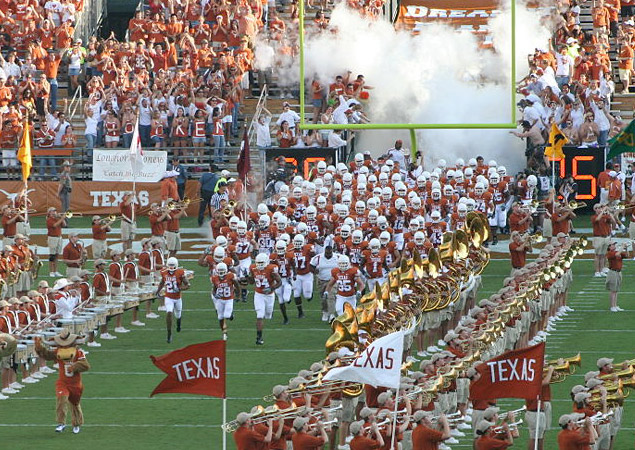
Friday Five: 5 Indie Rock Songs for College Football


It's September. College kids are strutting back on campus, the hefty guys are throwing some footballs on Saturday and some coolness is entering the air. And we're not talking about the weather. We're talking about the frat boys who now listen to Dirty Projectors (wait, are they cool? I don't know...).

To bridge the worlds of indie rock and college football, Deckfight has asked Bryan and Langston from The Lawn Chair Boys to illuminate us on what college football would look like with an indie rock touch. And if you're not familiar with The Lawn Chair Boys, they bring the best ironic punch to sports this side of Ron Artest. And while you're there, check out my guest post on the Chicago Bears and Vanderbilt from last week.

5 indie rock songs for college football:


1. Tailgating: "People Say" by Portugal. The Man
The line "We may make it through the war if we make through the night" is sung with only the hope one can find in parking lots, ladder golf, and a solo cup. This song perfectly captures the positivity of tailgating while declaring that such festivities are indeed preparation for battle.


2. Entrance Music:"I Start to Run" by White Denim


Virginia Tech enters to the intensity of "Enter Sandman," which would certainly drown out the silence of Texas Tech's Mike Leach's speeches. He believes a calm team is a better team. In White Denim's song "I Start to Run," one finds the stark contrast of both philosophies, as the stadium is ripped apart by the crowd chanting, "start to run," before kickoff ensues.


3. Halftime Show Song: "Harmonium" by Rogue Wave


Halftime shows are supposed to be epic productions. They need twirling flags and layers of emotion, and the sounds need to shift in one's ear like colors in a kaleidoscope. They also need to be long enough for one to go by the bathroom and the concession stand without feeling like they missed anything. Rogue Wave's "Harmonium" does all these things.


4. Fight Song: "Give 'Em All a Big Fat Lip" by The Whigs


A fight song needs a driving bass line, like a heart that promises to beat through bone and flesh and defeat. Plus, the lyrics suggest one's opponent will get a punch to the face. Too bad Oregon coaches didn't encourage LeGarrette Blount to take up the bass guitar.


5. Alma Mater: "Chug Along" by Trainwreck Riders

Win or lose, at the end of the day, everyone's got to get together, hug, sing, and maybe toast a few. You know, all that about sentimentality hanging in the autumn leaves and from the goal posts. A song has to capture that: "paradise and a bad dream."

Bonus: Obvious omissions
"Underdog" by Spoon and anything by American Football.


More after the jump...

Thursday, September 10, 2009

review: David Bazan Curse Your Branches


David Bazan: "Hard To Be"
David Bazan: "Bless This Mess"

The questioning of God in all forms on this album cannot be denied, but what David Bazan's
Curse Your Branches shows is that the transition from belief to unbelief and possibly back again is not simple. It’s not a lightswitch, it’s not an easy button. In fact, it’s painful, despairing, confusing, heartbreakingly awful for your daughter to ask about God and not know what to tell her, as in "In Stitches." Then try “Bless This Mess” and “Hard To Be.” Both deal with decisions, family acceptance, family denial, and pervasive societal narratives. "Lost My Shape" is a slow plod that mentions drinking and worry over denying God, full of metaphors about lost causes. Bazan in Pedro the Lion was never the perfect premise of optimism, but most of this is dark even by his standards. But all of Bazan's musings are marks of someone who takes belief and then the declaration of unbelief seriously.


Bazan asks questions that every human being finds themselves asking at one point or another--but Bazan is bold or stupid enough to bring them into his art. Honesty has never been something he has struggled with. But now his brutal truth brings his beliefs to the forefront--Bazan (like the similarly misunderstood Daniel Smith of Danielson) had his first album released on a christian record label, back when that label Tooth and Nail took chances they could not fathom now. That decision has been more of a hindrance than a help for Bazan and his many critiques of Christianity over the years. The Christian market has very defined limitations, least of those are its actual beliefs, but it’s more about marketing and image and style...the same elements that go into every successful act on any major label. In other words, no matter if Bazan was still as active in his Christian faith as any pastor, his general style and outlook would not be a fit. Which is why
Curse Your Branches matters.

With that in mind, none of Bazan’s songs stray far musically from his previous adventures, except songs like “When We Fell,” “Bearing Witness” and “Bless This Mess” contain an undeniable jaunty joy, more pep in Bazan’s steps. Is their glee here? A hint of smirk? Possibly. Or it’s the culmination of more of his solo work, with some dabblings in classical country stylings--unlike the more modern rock element of
Control for instance.

Similar metaphors, such as the garden of Eden, the captain of a ship, having and developing children, original sin. All of these Bazan obsesses over in
Curse Your Branches, with the most definitive answer coming in the title track:
“Oh, falling leaves should curse their branches
For not letting them decide where they should fall
And not letting them refuse to fall at all”

Perhaps Bazan is not as frustrated at God, but just the process used in making people decide about God. Maybe grace and understanding is needed. Any who may be celebrating over Bazan's decision to seemingly reject his Christian beliefs are not listening close enough--in many ways, it's missing the point. Again, in “Curse Your Branches” Bazan asks:
“Red and orange, or blue and yellow
In which of these do you believe?
If you're not sure right now,
Please take a moment
I need your signature before you leave”

Some will be sure and definitive in their beliefs all their lives. Others need time and patience. I’m not sure where Bazan is, and it’s not up for me to decide. He’s asking questions, making his beliefs real. Asking questions that atheists, agnostics, Christians and other religious adherents need to ask. But
Curse Your Branches shows the often thin line between belief and unbelief.


More after the jump...

Wednesday, September 9, 2009

Swing South: John Ralston


John Ralston: "Ghetto Tested"

I'm enjoying the recent wave of emo troubadours, now that Dashboard Confessional is pretty much out of the way. Guys like Ace Enders, Jon Nolan, even The New Amsterdams. There are a whole bunch of others and one of those is John Ralston. From Lake Worth, FL he took a similar road after his stint with Legends of Rodeo, a band I love. Their early Americana/alt-country/emo hybrid seemed foreign in 2002 but now seems almost commonplace.

Ralston has embraced that ethic even more so with his solo releases, and has slowed down his tunes but has thrown some more electronic wash into the mix (see "White Spiders" and "Gone Gone Gone," a Legends-sounding song).

With all that said, personally I've dropped the ball on Mr. Ralston. Don't have any of his albums, but think I'll pick up some soon.

Southeast tour dates & vid after the jump:


This is a fan video of "Gone Gone Gone," but it's done well.

Southeast tour dates:

Sep 11 2009
New World Brewery Tampa, Florida

Sep 12 2009
Redlight Orlando, Florida

Sep 13 2009
Local 506 Chapel Hill, North Carolina

Sep 14 2009
Jammin Java Vienna, Virginia

Sep 21 2009
Drunken Unicorn Atlanta, Georgia

Sep 22 2009
1982 Gainesville, Florida

More after the jump...
Related Posts with Thumbnails